St. Petersburg has a median home construction year of 1969, so many bathrooms have original plumbing and tight layouts. The city has its own permitting office, and its 49% rule applies to cumulative repairs and improvements. Call the number on this page to be connected with a local bathroom remodeler in St. Petersburg.
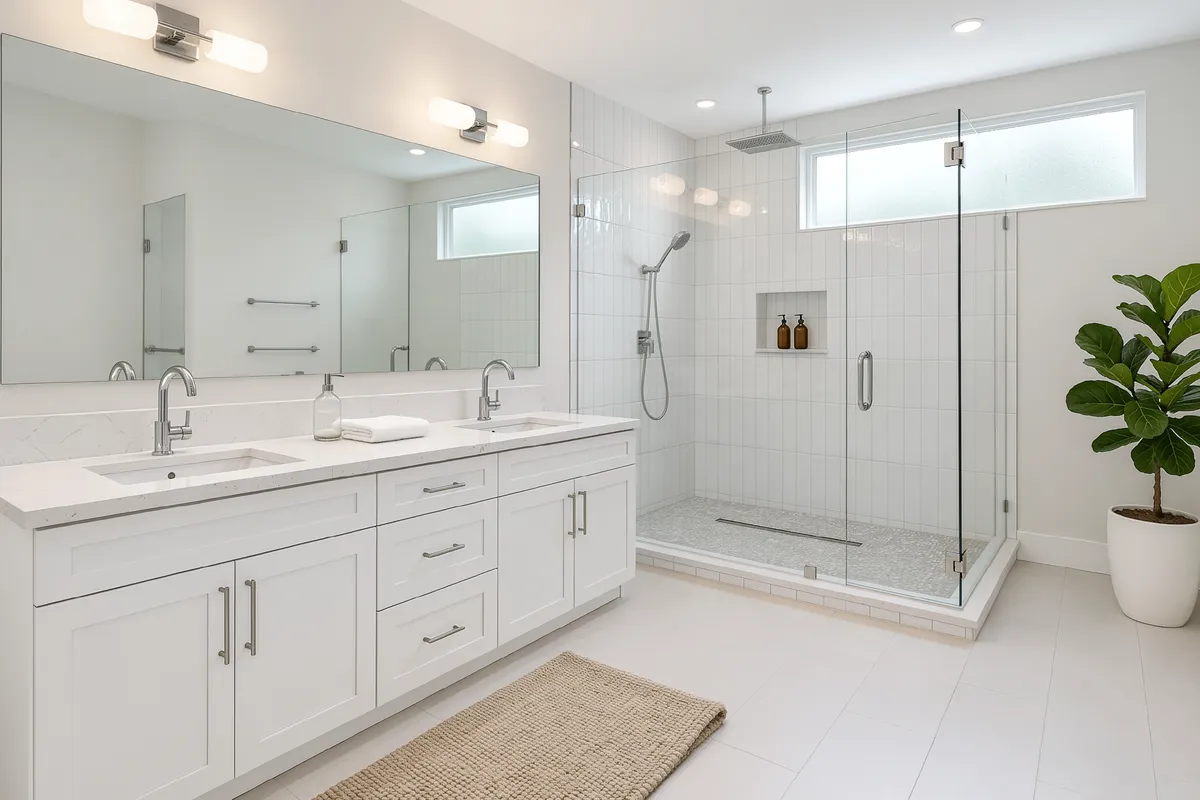
Bathroom remodeling services in St. Petersburg
An older city with older bathrooms
With a median build year of 1969, St. Petersburg is one of the older housing markets around Tampa Bay. Neighborhoods such as Old Northeast, Snell Isle and Historic Roser Park contain homes with character and, often, bathrooms that were small to begin with. About 37% of occupied homes are rented, so a lot of work here is done by landlords refreshing a unit as well as by owners staying put.
Small footprints shape the options. A small bathroom remodel can gain space by swapping a pedestal sink for a slim vanity, using a glass door instead of a curtain, or moving to a larger walk-in shower in place of a tub. Many bathrooms on slab foundations are costly to re-plumb, so keeping drains where they are is the lowest-disruption route.
Popular projects in St. Petersburg
Typical requests include a tub-to-shower conversion, new wall and floor tile, a replacement bathtub, and full remodels that update lighting, fan and vanity together. Humidity is constant here, so a quiet, properly vented exhaust fan is worth including in nearly every scope.
Permits from City of St. Petersburg Building & Permitting
Permits come from the City of St. Petersburg Building & Permitting office, at 727-893-7231. The city's homeowner exemption form covers only single-family work under $7,500 outside flood hazard areas, and only where there is no structural, mechanical, electrical, plumbing or gas work. In practice, plumbing and electrical changes need a permit. Ask any remodeler to explain which items on your scope are pulled under a permit and which inspections follow.
The 49% rule
The city designates flood hazard areas, with a lookup at stpete.org/rule49. Under its 49% rule, any combination of repair, reconstruction or improvement whose cumulative cost reaches 49% of the structure's market value is substantial, and the building must meet current flood rules such as elevation or floodproofing. The city says this applies to all repairs and improvements, not only flood damage, and market value comes from the county property appraiser or an independent appraisal. Pinellas County also notes that standard homeowners and renters policies typically do not cover flood. If you are bundling a bathroom with a kitchen, roof or window project, ask the city how the total is counted.
Lead and asbestos in pre-1978 homes
Because so many houses date from before 1978, the EPA lead renovation rule often applies when painted surfaces are disturbed. Older flooring, adhesive and wall products may also contain asbestos. Raise both with the remodeler before demolition, not during it.
Verify the contractor
Use the DBPR search at MyFloridaLicense.com to confirm that a plumber or electrician holds the right Florida contractor license, and check the contract for a notice of commencement plan. Tile and cabinet work does not need a state license, so a clear written scope matters even more there.
Common questions in St. Petersburg
Do I need a permit to remodel a bathroom in St. Petersburg?
What is the 49% rule in St. Petersburg?
Can a small St. Petersburg bathroom fit a walk-in shower?
How do I confirm a contractor holds the right license?
Nearby cities and towns
Sources
- City of St. Petersburg Building & Permitting (Construction Services and Permitting)
- City of St. Petersburg: permitting after a storm and the 49% rule
- St. Petersburg housing by year built
- Pinellas County: flood information
- Florida DBPR: verify a license
- Florida Statutes s. 713.13: notice of commencement
- FEMA: substantial improvement / substantial damage
- EPA: lead renovation, repair and painting rule
Last updated: