Independent remodelers build additions in several ways, from a closet conversion to a framed extension on a new slab. Each approach changes the work, the permit and the timeline. Call the number on this page to be connected with a local bathroom remodeler in Clearwater.
Where it fits best
The best locations sit near an existing bathroom, kitchen or laundry, where drain and supply lines are close. A remodeler will check the plumbing path, the slab or crawl space, the water heater and the electrical panel before suggesting a spot.
Garage and closet conversions
Turning garage space into a bath means a vapor barrier, insulation, a floor brought up to living level and a new drain through the slab. Closet conversions are tighter, but may need only a short drain run if a wall is shared with another bath.
Much of Clearwater's housing dates to the 1970s, and many of those homes have a single bathroom. Adding one often means working around galvanized or cast-iron lines and checking the slab and framing carefully.
Near the water, a new bathroom must handle humidity and salt air, and a built-on room may face flood-zone elevation rules. Ask the remodeler to check requirements before drawings are finalized.
Cost drivers to expect
- Slab cutting, trenching and patching
- Drain, vent and supply runs
- Framing, electrical and ventilation
- Permits, inspections and engineering when needed
- Finishes and fixtures
Allowances for tile and fixtures are common. Ask each bidder to separate these lines so you can compare them fairly.
How an addition progresses
- Walk the house and choose the location
- Draw the plan and pull permits
- Cut the slab or pour a new foundation
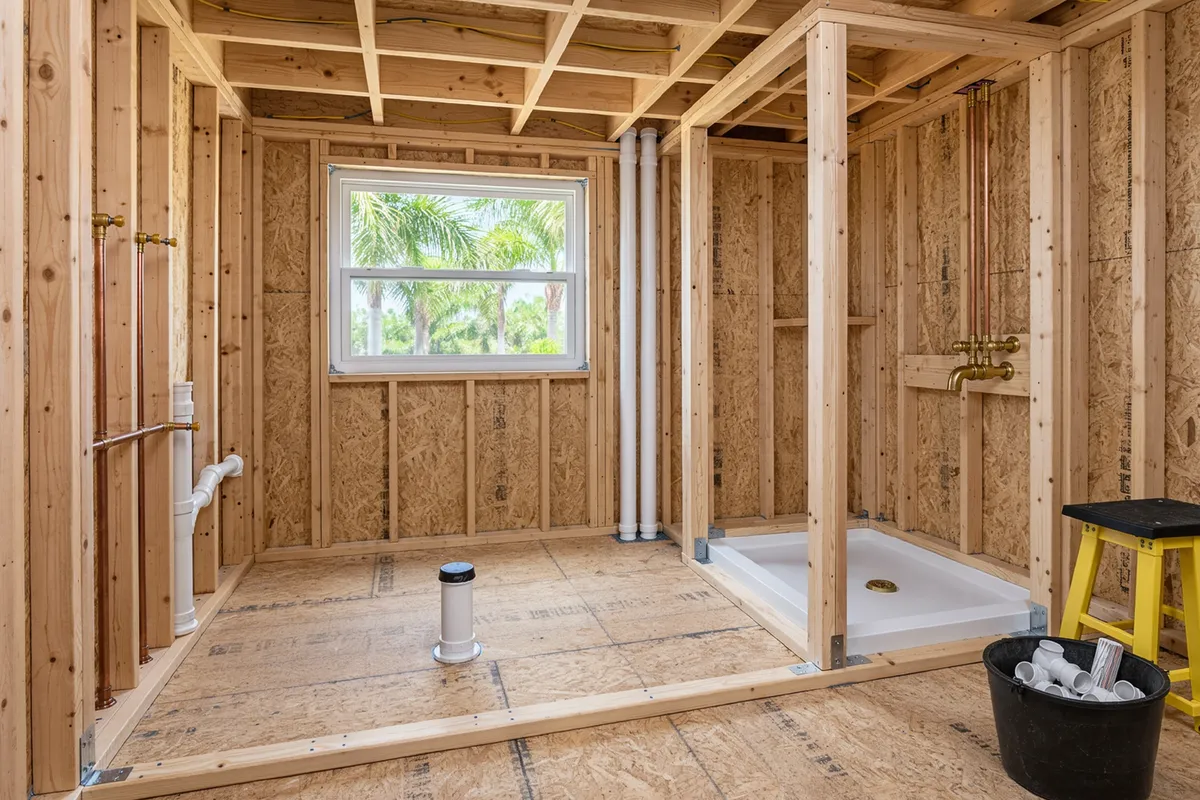
- Frame, rough in plumbing and electrical
- Inspect, close walls and finish
Skipping an inspection stage can mean reopening finished walls.
Local details for Clearwater
Building permits for Clearwater addresses go through Clearwater Planning & Development. Swapping a vanity or retiling in place is often treated differently from moving plumbing, adding circuits or changing walls, so ask the remodeler which applies.
Florida lets you look up a contractor on the state DBPR licensee search. Check the name on the contract against it, and ask who will pull the permit.
Flood zones add one more check for a big remodel. The city defines substantial improvement as any reconstruction, rehabilitation, addition or other improvement costing at least 49% of the structure's market value, measured before the first improvement starts.
Homes built before 1978 may have lead paint, so renovation crews disturbing painted surfaces should follow EPA's lead-safe work rules and hand you the Renovate Right pamphlet.
Remodelers that take calls here usually also work in Dunedin, Safety Harbor and Clearwater Beach.
Check the license
Look up the contractor on the DBPR license lookup and confirm that the license fits construction work. Plumbing and electrical tasks are done under their own trade licenses, so ask who will perform them, whether they are listed and whether they work for the contractor or as a separate business.
Around Clearwater
Calls come in from across Clearwater, including around Clearwater Beach, Downtown Clearwater, Clearwater Memorial Causeway (State Road 60).
Bathroom Addition questions in Clearwater
Can a bathroom be added without enlarging the house?
Does the electrical panel need to be upgraded?
Can a garage be turned into a bathroom?
Where should the exhaust fan vent?
More bathroom remodeling services in Clearwater
Bathroom Addition nearby
Helpful guides
Sources
- City of Clearwater Planning & Development (Construction Services)
- City of Clearwater Planning & Development (Construction Services): floodplain rules
- Florida DBPR: verify a license
- Florida Statutes s. 713.13: notice of commencement
- FEMA: substantial improvement / substantial damage
- EPA: lead renovation, repair and painting rule
- Clearwater housing by year built
Last updated: